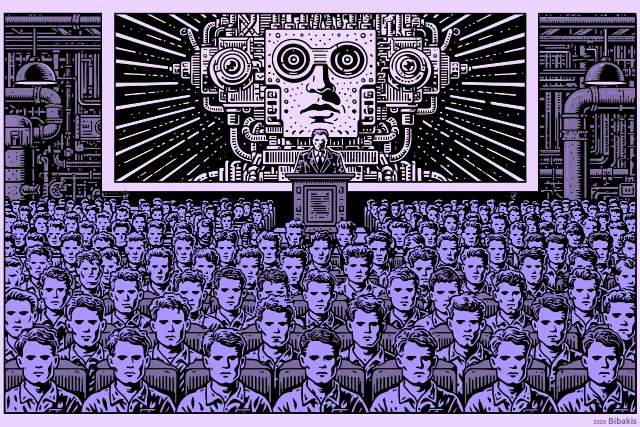
As you may have read in Guardian or Forbes, from time to time I put together little verses so we can have a laugh with my nieces and nephews when we meet at relatives’ houses. So, during a recent recitation, I heard (from an adult, and it was not the first time): “There is no way you wrote such a masterpiece yourself. You definitely got artificial intelligence to write it.”
I have heard lines in political discussions such as: “Yeah, mate. That country has X/Y quality of life. I'm certain. AI told me.” That is roughly like saying: "John went to the lake yesterday. I saw it in Photoshop.” Even clients come to me and say: “Run this command on the server. Artificial intelligence told me to.”
But as this keeps repeating and a patern is created, an enormous problem surfaces. One that humanity will have to face very soon. People believe, as objective truth, everything AI chatbots tell them.
So the average person, knowing little on the subject being discussed, delivers the final blow to whatever little reason they had acquired with difficulty so far. Humanity surrenders its thinking without a fight.
We reiterate out-of-context information which essentially amounts to half-chewed food, from a tech in its early stages, which still has yet a myriad technical issues to overcome.
I can understand the average person not knowing that I wrote most of my poetry around 1650, long before the discovery of electricity, let alone AI. I understand them giving me server commands like that, practically at random. All of this looks like Chinese to them anyway.
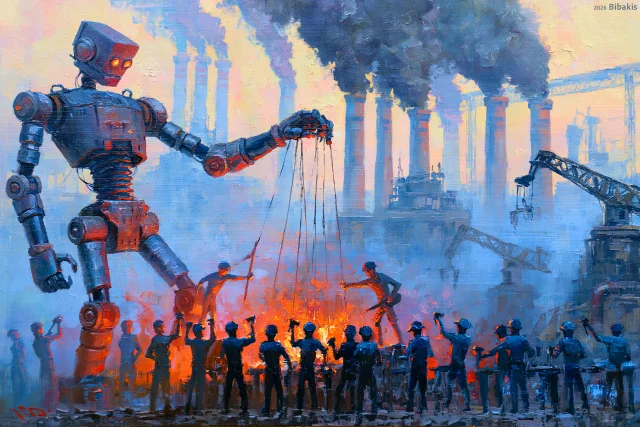
But when it comes to the shaping of political thought, we have a major problem. Did none of those "masterminds" ever wonder what happens behind an AI chatbot? Who programs it? Who configures it? Who gives it data? Did no one wonder if there is an enormous incentive to influence a program that speaks to millions of people every day?
As we already know, however, from our past interactions with the people around us, the fact that something speaks does not in any way mean that what it says is necessarily true. The time has come to understand that, apart from people, this also applies to software and machines.
It is the best way to help an independent voice in an age where the algorithms of "social" media only promote low quality content for the clicks.