While in theory a perfect computer system is possible, in practice all of them eventually crash. It is considered inevitable. It is hard to study the crashes of live computer systems as once they crash you are locked out.
But as history repeats itself over and over again, we have more than enough data to study the crashes of political and economic systems, here, in the real world.
The political system called "European Union" is on its way to crash. And so far, it seems that nothing can be done to stop it.
Let me be clear that in this article I'm not making some profound discovery. There are many others more specialized and qualified than me, who have not only observed the ship's direction, but have even proposed realistic solutions.
And while there are many people in Europe who know how to fix things, what nobody has found yet, is a way to convince people to accept reforms and radical changes in their daily lives.
Let alone that the continent is under constant pressure from forces inside and outside Europe who benefit the most from inaction.
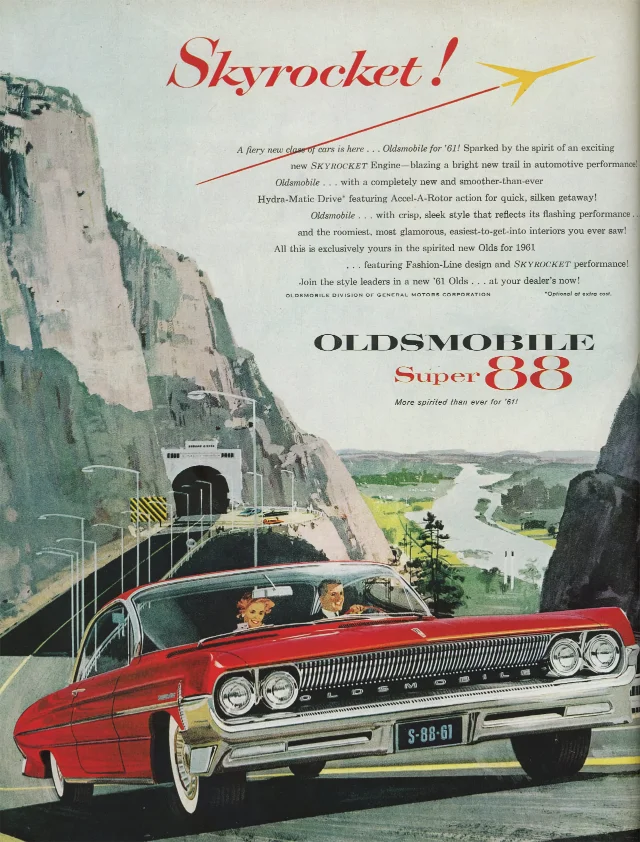
The feeling of speed you get from a speeding car is much stronger inside a car that accelerates from 30km/h to 60km/h compared to one that goes from 120km/h to 125km/h.
You see, we humans are not measurement instruments. We were not made to measure whether a car is moving at 80 or 90km/h. But we can easily recognize quick changes to the values around us, like in this example of the speeding car.
The scientific term for this, is "habituation". And a more precise term for values that are related to our quality of life, is "hedonic adaptation". This explains how that new 60" TV you bought has that wow factor for the first months, but it gradually becomes yet another everyday object. The same goes for that new expensive smartphone, the shiny new car, etc etc.
As we and the people around us, increase our quality of life by little or more day by day, we get that feeling of the speeding car. We feel "economic acceleration". A metric we can easily perceive. This gives us many small moments of happiness which make us optimistic and joyful. And when most people live their lives that way, the entire society is healthy and happy.

But there are many things that can terminate that situation and create a downward spiral of constantly declining economics and in turn, misery and pessimism. Sometimes it is an external political event, sometimes it is a natural disaster and other times unfortunately it is war.
People may objectively have a very nice quality of life compared to their past selves or compared to people in other countries. But as we discussed above, it is only the rate of change in their standards of living that they can really grasp. This is the core factor behind their actions and decision making.
And when economy hits the breaks, people's mindset changes. If things are bad, people rapidly conclude that their leadership has failed. And it is not only the political establishment that is in question. It is also science, law, institutions. Everything is suddenly in dispute.
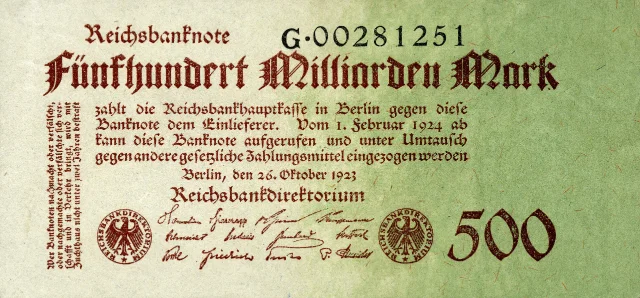
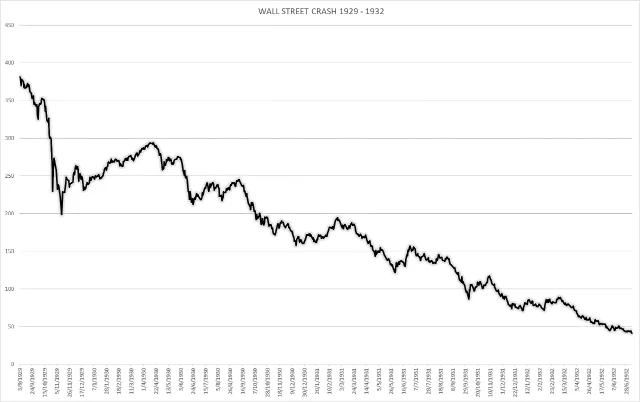
The great depression in 1929 acted like the final blow to the German economy which was already weakened by the harsh terms of the treaty of Versailles and the fact that the country had been essentially "cornered" by Great Britain controlling the seas using its enormous fleet.
Six million Germans were unemployed in 1932. The Weimar Republic collapsed one year later.
There are many other similar historical events, like the French and the Russian revolutions or the collapse of the Soviet Union. A pattern is clear in those situations.
Disclaimer: I don't suggest that any political change by definition improves things. Many revolutions have failed to address the real issues behind a failing economy. Because more often than not, you may change yourself, but not the world around you.
Yet I do believe that we should encourage change most of the times. It is like when you are in a bad job. Yes, theoretically the next one could be even worse. But chances are that it won't. Because simply by changing things you are addressing at least some of the current problems.
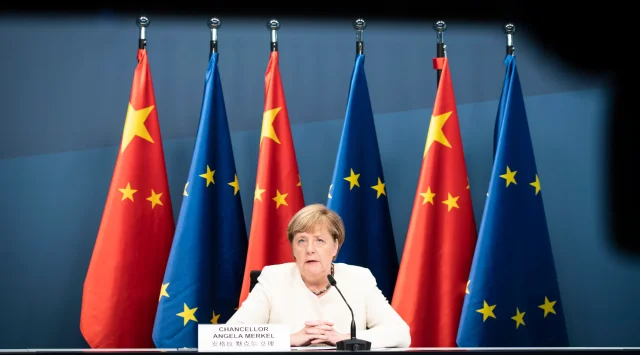
I cannot blame Bill Clinton or Angela Merkel for not seeing 10 or 20 years ahead of their times. I also don't know if the people of the United States and Germany would ever accept a proposal to not open trade to China, with the downside that economic growth in the west would slow down.
But what is certain, is that because of the actions they took, global trade is now shifting from the North Atlantic to southeast Asia.
During the 90s, Europe represented a little more than one third (33%) of the global economy. Right now this number is less than one fourth (24%) and dropping.
Yes, in theory the European economy has been growing all that time. But with a much lower speed compared to the rising economies in Asia. Their quality of life is improving, ours is degrading. Year after year.
I strongly believe that unfortunately the EU cannot get more competitive for a series of reasons.
Our leaders still carry a mentality of satisfying the masses by distributing "free money". In post-WW2 Europe, peace was "on the house" in the form of free military protection by the United States. Also after the Iron curtain collapsed, Russia supplied the cheap resources required for Europe's economic growth.
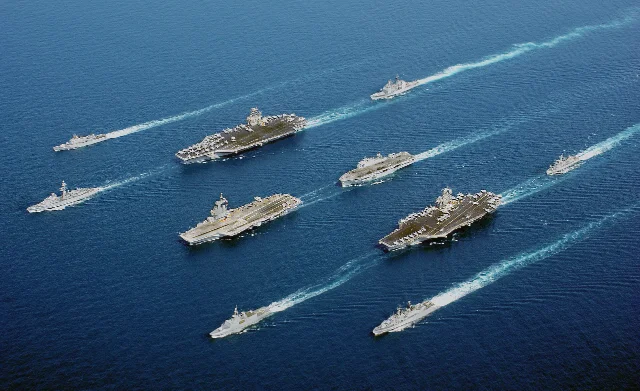
But now that China is a new and rising superpower, the USA has new priorities in the Pacific and Russia doesn't have to give away their resources for cheap anymore, as their new customers in Asia are willing to out-pay Europe.
So Europeans cannot maintain the same living standards without a way to address those two hot potatoes. Obviously to achieve that, a lot of radical changes need to be made.
Most efforts for economic and structural reforms end up in uprisings and riots in European capitals. Most notably the yellow vests in Paris.
People see their quality of life constantly dropping without them having done anything different compared to the "good times". It is impossible to get them to voluntarily accept sacrifices for a problem that they didn't create.
The EU is not yet a real economic union, let alone a true political power. There are 27 countries in the EU. 27 leaders. 27 tax systems. 27 constitutions. 27 legal systems, 27 armies. To that ineffective and pointless complexity, the other major global powers answer with 1 leader, 1 legal system, 1 army, 1 economy.
There is a famous quote, initially attributed to Henry Kissinger, that hit a nerve. “What is Europe’s telephone number?”. And indeed, 64 years after it was founded, the EU is still only but a loose economic union at best. Something that we all hoped it would work, but it never did.
Xi Jinping or Donald Trump can wake up and take any decision they like. And after a reasonable amount of time, voila, it's in effect. Meanwhile in Europe, Poland has to convince Malta, a small island country near Africa, to slash their pensions in order to give more funds for the defense budget.
And as always in all decisions that Europe must make, a watered-down pointless statement is released after a round session, making sure that nobody is ever displeased.
9 times out of 10, this translates to: take no real action, make no real changes, keep the dysfunctional system in place. Bury the problem under the carpet and let the next leaders deal with it.
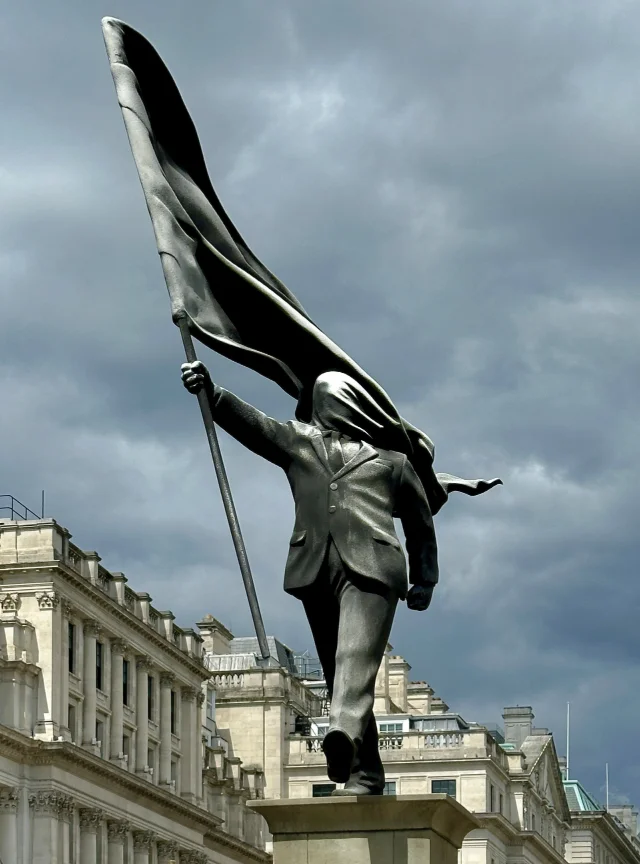
Europeans still value their national identity more than their collective continental interest. This acts as an impossible barrier that prevents European unification.
This mentality is what remains of centuries of nationalism and inner-European wars. We may have dropped the borders from our lands and the customs from trading, but mentally we are still divided.
The British still don't like the French very much and the Germans still think that Greeks are lazy. And our leaders have no reason to change that convenient (for them) system. Why be a "simple" European official when you can be your nation's one and only president?
Exactly like the political parties of the left, or like the myriad of Linux distributions, it is a situation where everyone is happy running their tiny little kiosk, till the big supermarket comes along and puts everyone out of business.
People usually realize their mistakes only after the die is cast and they see the "Game over" screen. Till then, they are fine enjoying their comfort zone.
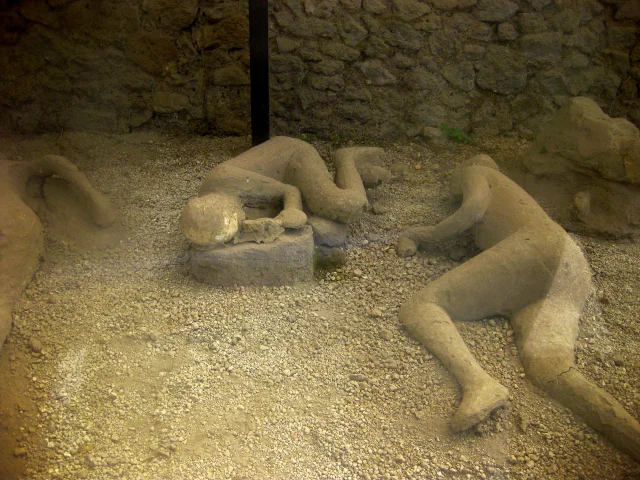
This wishful thinking was also noticed during the last hours of Pompeii. Many people just stood there, watching the eruption of Vesuvius for hours till it was too late.
Maybe it'll stop. Maybe the gods are just playing games. Maybe it's not a real fire. They all burned alive.
Disclaimer: I love my country like all of us do. And I believe patriotism is a healthy thing. But blind nationalism is not that. It was forced upon the people of Europe about 250 years ago because the emperors of the time needed soldiers so nations can keep on fighting each other.
The times have changed. Now the enemy is outside the continent. And this is primarily an economic war. Putting the short-term interest of our small nations over those of our big continent, is acting as a ball-and-chain, holding Europe back.
As you may have noticed, we are entering phase #4. When everyone is in fight-for-survival mode, following the rules becomes an optional luxury. And the more the fight intensifies, the more the authorities are forced to look the other way. Because at that scale, it is simply very hard to apply the law.
Which explains for example why LinkedIn openly violates the European GDPR law by refusing requests by citizens to have their accounts deleted. Or why dark patterns are now the norm in most B2C software.
Of course don't take the above as approval to defy the law. But do take it as a hint to strengthen yourself financially. Work smarter, work harder, take your work more seriously. And most of all, take more action.
Because as in all fights, in this economic fight as well, it always helps to have the high ground.
A final word: I am well aware that trying to predict the future based on the data and models of the present, rarely succeeds. There is always something that was impossible to forsee initially that comes along and changes everything. Take articles like this one simply as food for thought and nothing more.
It is the best way to help an independent voice in an age where the algorithms of "social" media only promote low quality content for the clicks.